
18th May 2026
The Strategic Benefits Of Acoustic Ceiling Systems
It is amazing how much we overlook what is happening right above our heads. You may walk into a luxury hotel lobby, or a sleek new office and are immediately taken by the soft lighting, or the plush modern furniture. But then you take a seat and realise that you can actually hear your own thoughts. This is not an accident. Most of the time, when the space is wide and open but the experience is peaceful, there is a silent hero at play, in the form of a well-engineered acoustic metal ceiling.
At Amron, this is something that we see on a fairly regular basis. Clients come to us asking for ways to minimise the clatter and clutter of a busy workplace, or the ding of fork tines and chatter of a fully booked restaurant. In the simplest of terms, they want a tool that will stop the room from sounding like a hollow cave, with every sound amplified and shared around.
That cute bistro may look great with bare walls and large glass windows, but the sound will bounce around with nowhere to go. Meta systems can help to change that dynamic completely. Let us explain how.
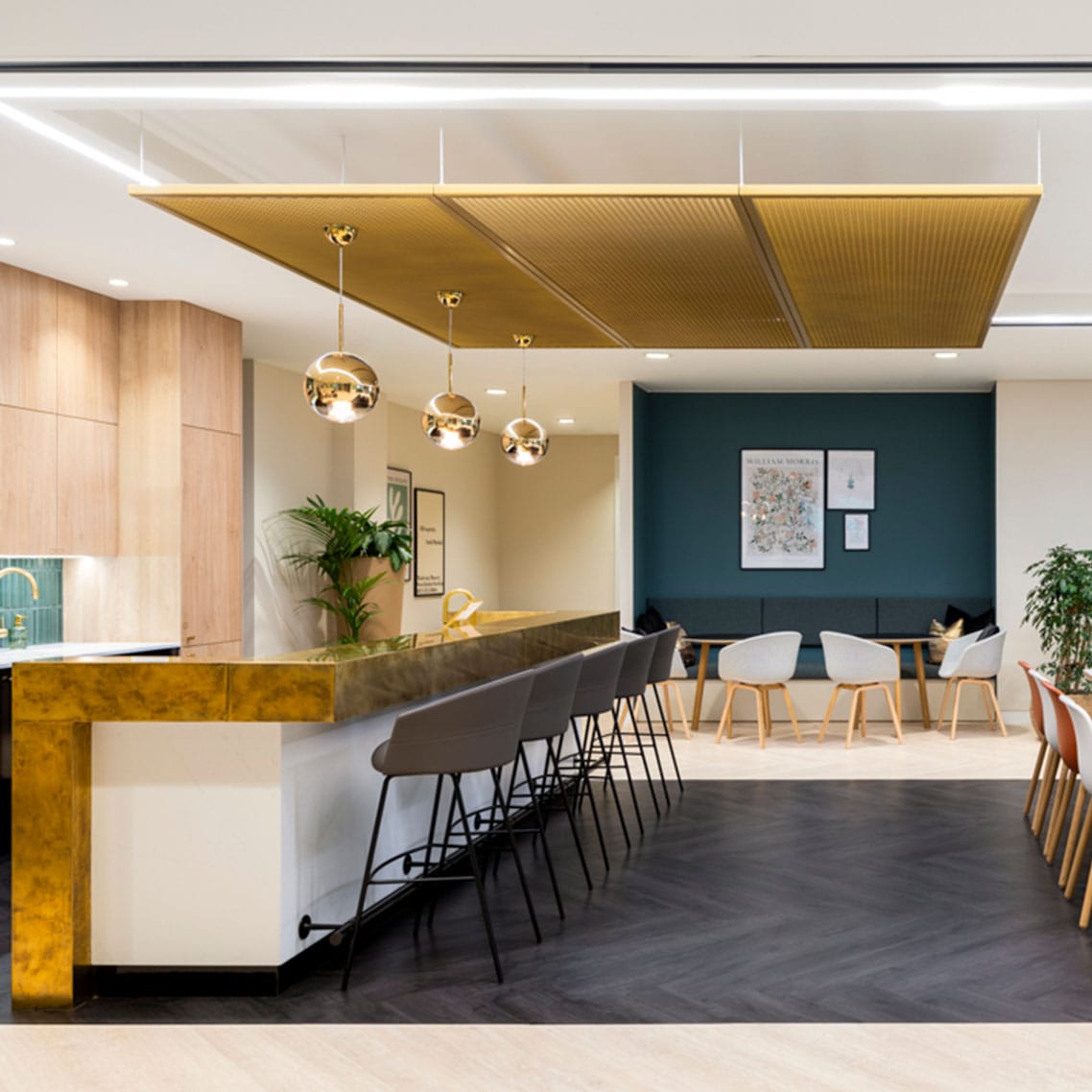
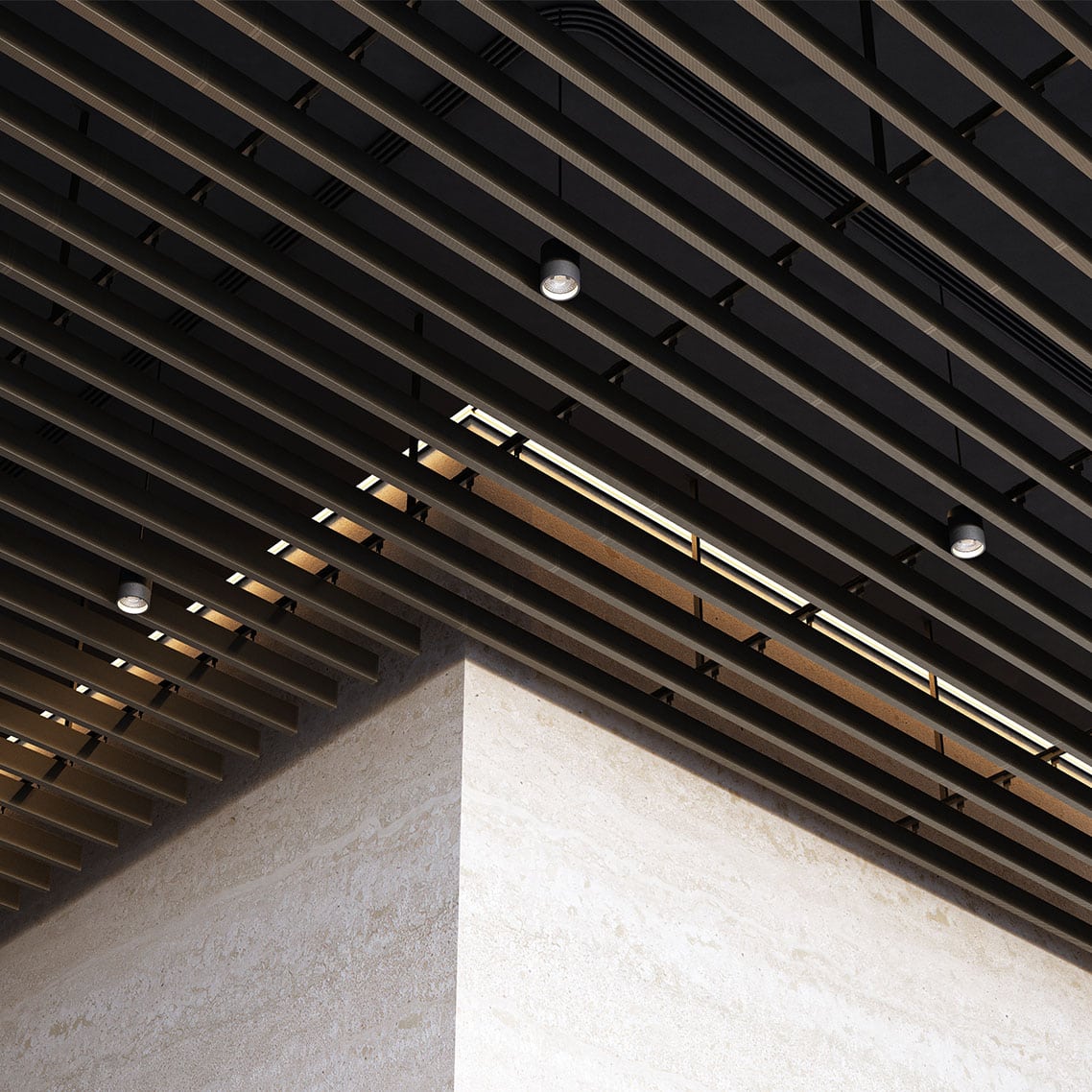
What are acoustic ceilings, and why do they matter?
As with many things that appear to happen as if by magic, the key is down to clever engineering. When we discuss acoustic ceiling systems it is important to realise that we are not talking about basic flat pieces of metal, such as steel or aluminium. These are panels that have been specifically designed with precise detailed perforations. Behind these holes there might also be an acoustic fleece or a mineral woolen pad.
The science behind the surface
First though, it’s time for a bit of science. Think of sound as a physical force. The sound wave hits the metal. Instead of bouncing back around the room and into the ear of everyone in it, they pass through the perforations. The backing material can then trap the energy and turn it into a negligible amount of heat. This is a basic, well-understood mechanical process that lets you drain the noise from a room.
In an open plan office this becomes an essential part of getting anything done. Once the telephone calls begin, clicking mice, a couple of meetings or the conversations taking place in the kitchen and it quickly becomes impossible to hear, let alone think. This could be the difference between a productive work day and a group of people that are constantly distracted by what others are doing on the other side of the room.
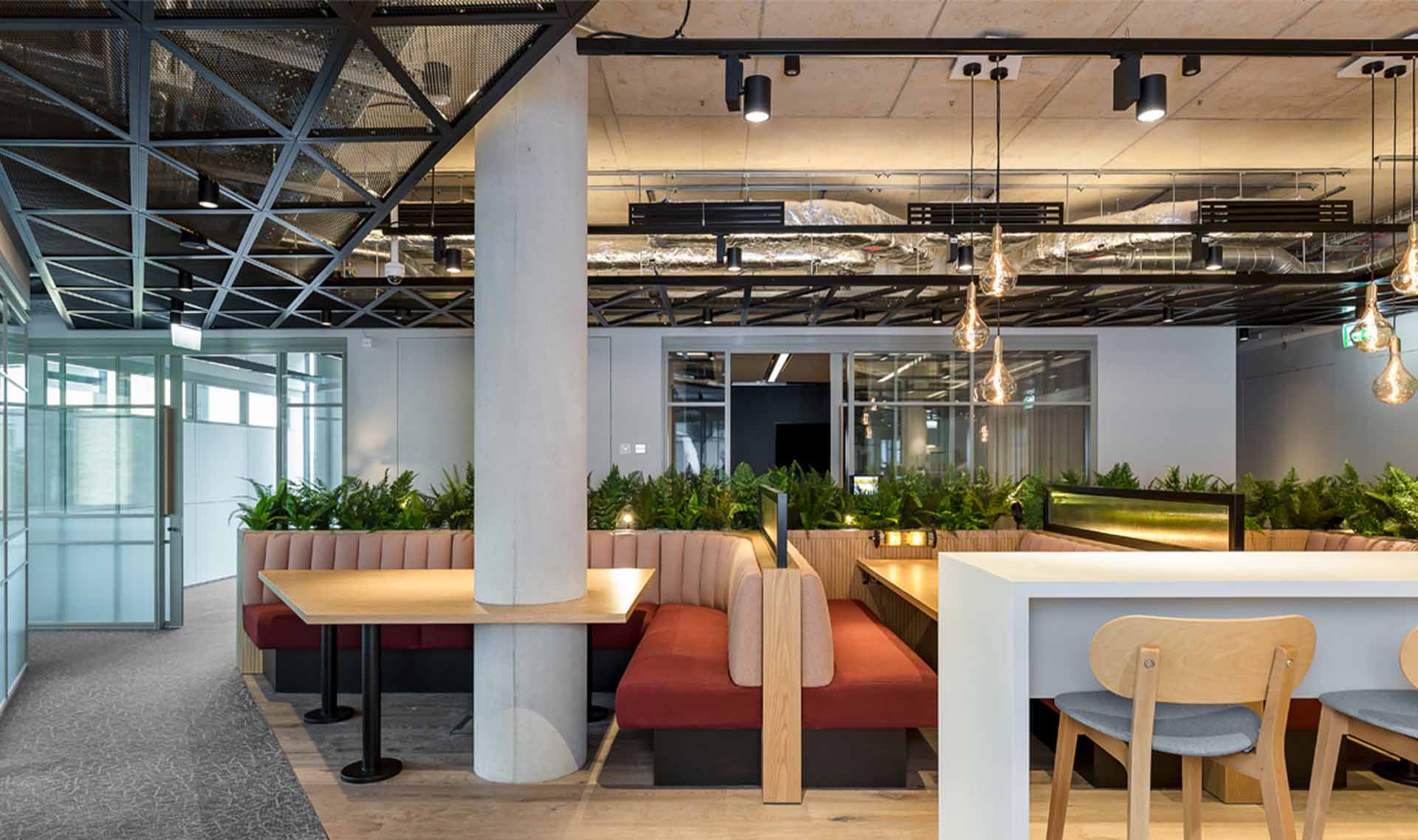
Why an acoustic metal ceiling wins in the long run
Acoustic help can come in many different forms, but an acoustic metal ceiling is the definitive choice for most contemporary settings such as urban offices, but it really comes into its own in busy modern restaurants. Even aside from the noise aspect, it is a tough environment, with steam and heat and constant cleaning requirements. Over time mineral fibre tiles used for acoustic soften tend to sag or stain and can quickly look like they have seen better days.
Metal offers a longevity that is difficult to match. It’s incredibly robust, while still being malleable. You can wipe it down and expose it to humid conditions without worrying about it warping. And it provides access that is quick and easy: need to get into the ceiling void to fix a cable or pipe? Simply pop out a tile and you won’t have to worry about a trail of dust or broken edges to contend with afterwards.
An acoustic metal ceiling will stay pristine looking for at least a decade, and for business owners, this can mean a reduction in long-term maintenance costs. Buy it once, but choose it right.
Shaping the atmosphere through design
While it may be tough, the sheer variety of aesthetic potential is really where metal shines. Begone boring white grid ceilings! There are now so many ways to decorate your ceilings, all with acoustic options built in:
Linear planks- These draw the eye and can be used to make narrow spaces feel wider and more open.
Large format tiles- Perfect for seamless finishes, especially when used with minimal colours. Especially good in high-end corporate interiors.
Expanded mesh- which gives a raw, industrial edge to an interior, while still effectively hiding the messy behind-the-scenes wires and systems.
Bespoke sculptural rafts- Which are Ideal for something unique, raft ceiling systems can hang like art pieces over entire rooms or in specific zones.
Yet there is more than simple structure, the textures created are also a powerful tool for creating an environment that is welcoming but eye catching. You can create different finishes that will reflect a specific brand identity. For example, a luxury hotel could opt for a subtle champagne-gold finish, while a tech start up wants something bold in powder-coated matte black. Colour and texture creates mood, and the ceiling design can very much become an active asset in creating it.
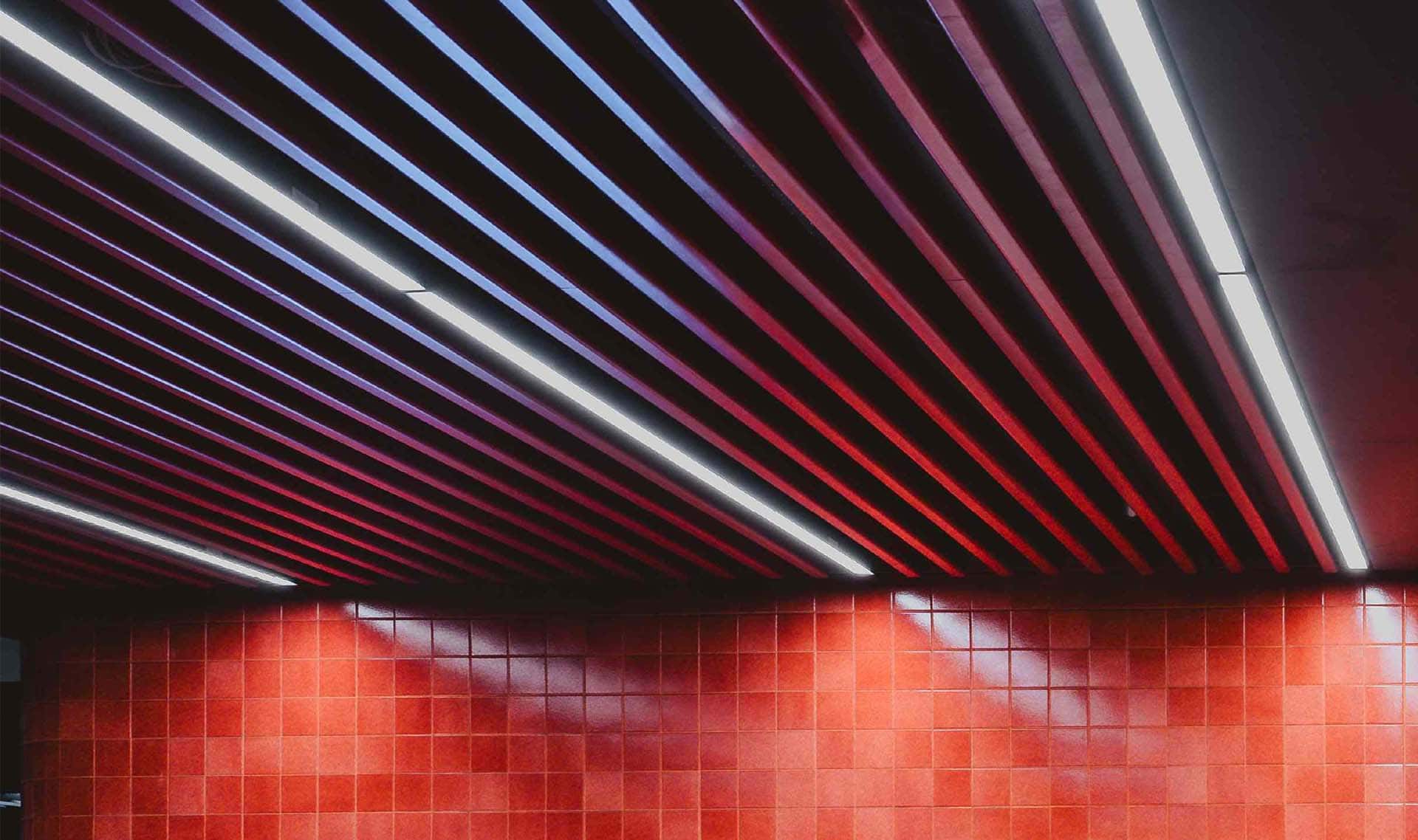
Safety and the green agenda
In 2026 it is almost impossible to talk about architecture and urban design without mentioning its impact on the planet. We no longer create in a vacuum where consequences can be blissfully ignored. Metal is thankfully one of the most sustainable materials on offer, and most systems specified nowadays are made up of nearly all recycled content. Plus there is the future to think about. When the building is renovated by the next owners in 10, 20, 30 years time, that metal will again be fully recyclable, avoiding adding to the already overwhelming landfill sites.
This is especially important for an increase in demand for BREEAM and LEED certified buildings. Using sustainable materials is no longer optional for most major commercial projects. It is a core requirement of the brief.
The other non-negotiable factor in architecture is safety. Whether you are renovating a hotel lobby, office block or state of the art restaurant, fire performance is absolutely critical. Metal is inherently non-combustible, so it will not contribute to the fire spreading, should the worst happen. Combine this with designs that house your sprinkler system, lights, air conditioning and other systems, safely and out of view, then you can have a ceiling that refracts sound, adds to safety and does it all invisibly.
But don’t forget the human element
Even the greatest design needs to work with humans. We are all naturally awed by grand, epic buildings with cathedral-like ceilings, but we can also be daunted by them. Lowering the ceiling can make a space feel more welcoming, and if you can imbue that ceiling with benefits that makes life below it a bit easier, then all the better. A well designed office tells employees that you care. It can reduce their stress and help them focus. In a restaurant, it could be the difference between customers returning; in hotels it imbues the spaces with a peaceful sense of luxury that visitors come to crave and are willing to pay for.
Acoustic issues are completely forgotten about until they are done poorly. You only know that they exist when they become a problem, and everyone will notice a ceiling when the room feels ‘wrong,’ even if they cannot explain why.
By getting the acoustic ceiling systems right from the start, you can ensure that your space feels welcoming and comfortable from the very first moment they step inside. In a world that is only getting louder, let them hear themselves think, even when others are taking a call in the corner.
Next time you find yourself in a place that feels exceptionally calm despite being full of people, look upwards. You will likely see some clever metalwork doing a lot of invisible heavy lifting.
If your project is facing a range of acoustic challenges, Amron Architectural would love to help you find a solution. Get in touch with us and begin problem solving with acoustic ceiling systems today.


