9th April 2026
How Metal Can Be Used In Heritage Building Design
There’s no denying that beautiful, centuries-old structures are the backbone of our British towns. The layers of history found in every high street or village square are the very things that tourists flock to see, and homeowners drop serious money to obtain. Yet the need to keep them as they were can often consign them to a life of drafts, damp, and museum-like atmospheres. While we want to preserve history, buildings are also there to be used, cherished and enjoyed—and you shouldn’t have to wear three jumpers inside to do so.
When you’re at the start of a heritage refurbishment for these kinds of historic buildings, it can feel overwhelming. The most common hurdle is just how to introduce 21st-century comfort inside walls made for thick clothes and fireplaces. Yet you also don’t want to alter the building in a way that makes it unrecognisable.
This is where many architects or project managers stumble. On one side, you have a conservation officer watching your every move, and on the other, a property owner who wants a high-performance, eco-friendly building with all the latest comfort-affording tech. This is where we step in: not just with a detailed plan, but also with carefully chosen architectural metal.


Veil for the past, space for the future
Architectural metal – especially mesh – has the rare quality of playing well with other materials. It can disappear when needed, and can stand out when the light hits it right.
In a setting where every stone and river view holds a story, you cannot simply bolt heavy, opaque panels to the walls and be done with it. Instead, using woven wire mesh, perforated sheets or dropped ceilings can offer a layered approach that allows you to hide the necessary but ugly modern bits – such as HVAC systems and cabling – while still allowing the original architecture to shine through.
It’s a bit like adding a veil to a building. It will add an extra layer, which may look modern and eye-catching or barely there, depending on the design. But its real purpose is to add modern functionality, without ever pretending to be something other than what it originally was.
Solving the modernisation puzzle of heritage refurbishment
Every modern project now comes with the caveat of sustainability, and for good reason. Our stunning heritage buildings may have been built to last for millennia, but they certainly weren’t built to be energy efficient by 2026 standards. Architectural metal can help with this in multiple ways, such as for solar shading. If you have a massive south-facing window in a converted Victorian warehouse, then you know that the heat gain on a sunny day can quickly become unbearable.
The work we did for St Hilda’s College, Oxford, is a masterclass in this sort of problem-solving design. For the college’s new Anniversary Building, we developed a bronze-coloured expanded metal mesh veil across the façade, providing a layered approach that adds modern functionality, without hiding the history below. But this wasn’t just for aesthetic appeal; it also acts as a high-performance solar screen, protecting the large glass elevations from solar gain on sunny days.
As well as making a space more comfortable, the mesh also reduces the need for energy-heavy air conditioning or other overtly modern additions. Here, a 21st-century solution was able to solve a thermal problem that has plagued historic sites for years. It will keep the space at a comfortable temperature, and the carbon footprint low, all for the sake of some pretty bronze additions to the façade.

The rule of reversibility in heritage building design
One talking point that comes up time and again for heritage refurbishments is reversibility. This isn’t just a matter of taste when it comes to modern additions to historic buildings and heritage building design, but one of legal compliance in the UK. To gain planning permission, the golden rule is that whatever you do to a listed building should be reversible in fifty years.
It is a common misconception that modern additions to historic buildings will always ruin them irrevocably. When you see those huge modern church extensions, for instance, they are rarely “bonded” to the old stone in a way that destroys the original wall.
Architectural metal is an ideal answer for this, as it can be incredibly lightweight when compared to solid masonry or heavy glass box structures. It also requires far fewer fixings, so if a future generation decides that they want something else, most metal systems can be taken down in a way that leaves the original buildings untouched.
It really is the only way to respectfully undertake a heritage renovation: by adding modern day functionality without sacrificing the historic character of the space. In prosaic terms, this light-touch solution is also often exactly what is needed to get a tricky planning application over the finish line.
Functional performance beyond aesthetics
When you work with historic locations that are open to the public, there comes a unique set of problems. While it may appear to be a museum within a pretty shell, it’s actually a design that pits you against both time and physics.
Older buildings were built to last: to withstand adverse weather, wars, and anything else outside their walls that wasn’t welcome. Because of this, they tend to be made of hard, large, and reflective surfaces that create a cathedral-like effect of echoing sound. While this might be great for recording music, it’s not ideal for 30 or 40 chatting tourists. By integrating different forms of perforated metal or woven mesh with acoustic backing, you can get on top of the reverberation, all without having to hide the original architecture.
Beyond sound, architectural metal can serve other modern-day purposes. One is providing ventilation for sensitive equipment, which may be necessary, but can be ugly enough that you might prefer to keep it hidden, without the risk of overheating.
As with anything based in the UK, these materials are also made to withstand the wonderful British weather. Metal won’t warp or rot as timber does. It requires very little maintenance once in situ, and it lets the building breathe and function at a modern standard for however long you need it to.

Choosing the right materials for a heritage refurbishments
We can talk all day about the technical advantages of architectural metal, but when it comes to heritage buildings, it’s usually the look of the place and the feelings it evokes that hold the most power. When undertaking these sorts of projects, getting the material right is absolutely paramount, but so is choosing the right finish.
We use our antique brass and bronze finishes frequently for historic settings, as they have a warmth that matches aged stone and dark timber, while also looking modern enough to avoid a museum-like feel. Here are three examples of how this can work across different eras of architecture:
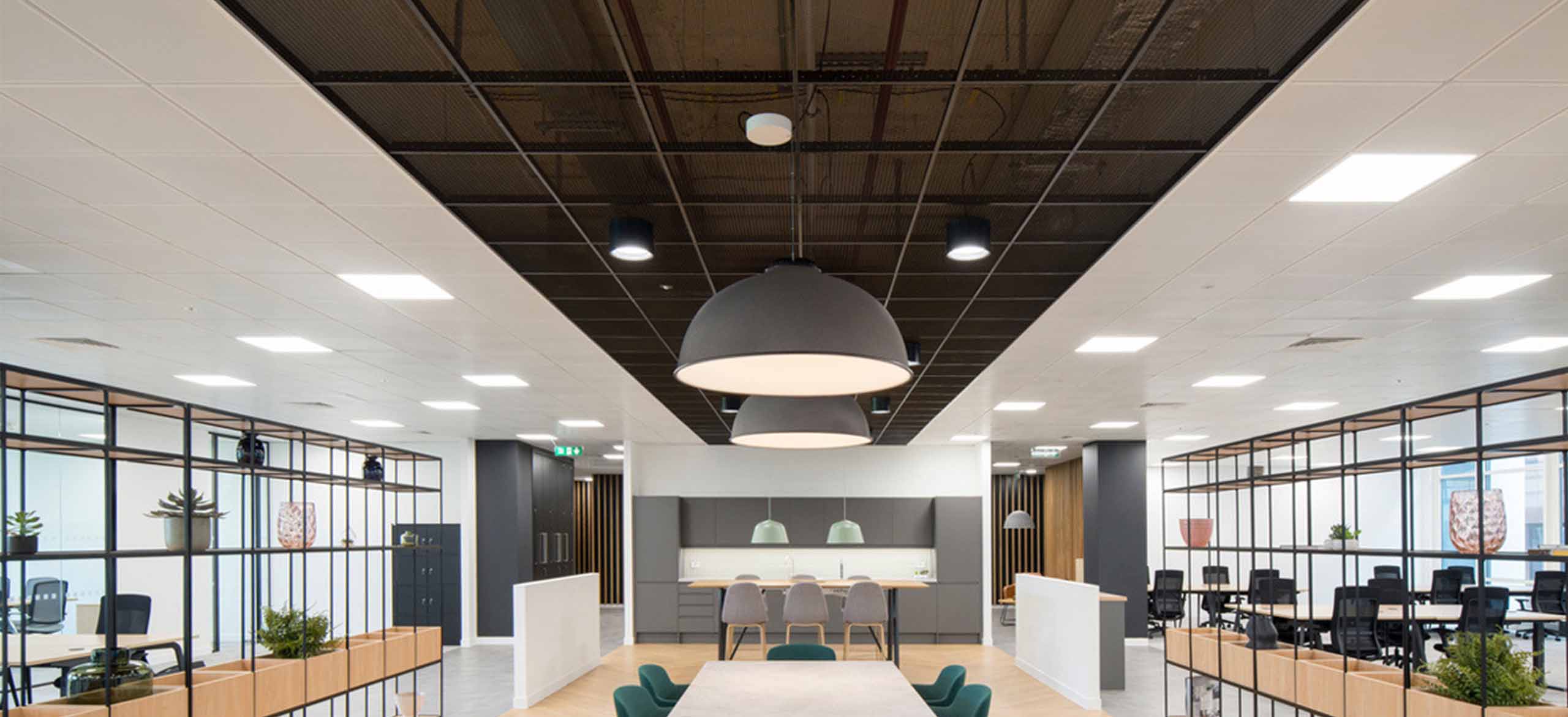
At The Post Building, we provided bespoke mesh ceiling rafts that allow the industrial heritage of the former Royal Mail Sorting Office to remain visible, while also giving the new office space a premium, contemporary feel.
At Salisbury House – an historically significant Edwardian London icon – we used mesh in a tactile Antique Brass for the lift shaft cladding. It met the modern safety and functional requirements of a busy city office, while also looking like it could have always been there. Both of these projects show that you can be bold with your material choice, add in a luxurious modern edge using metal work, and remain incredibly sensitive to the building’s soul.
For the New Little Mill in Manchester, meanwhile, we provided bespoke Zircon RB35 ceiling tiles for the communal spaces. The rugged nature of these tiles complements the Grade II listed former mill, combining classic 19th century grit with modern safety and acoustic standards.
When it comes to building materials, we know that there is a gulf between seeing them on screen and feeling the heft and weight of them in your hand. There is a tactile quality to architectural metal that you just can’t communicate through a photo.
Choosing the right finish is about more than just a colour code. It is about how that metal interacts with the existing textures of the site, which is why we offer a huge range of bespoke metal finishes.

Safety as standard
All pretty features and modern comforts aside, we all know that modern building regulations in the UK are a vital part of any project, and never more so than when working with older structures.
One of the best things about working with architectural metal is that it is inherently non-combustible. It is a natural choice for when you need to meet strict A1 or A2 fire ratings, without compromising on the heritage look of a place, ensuring that both the fire marshal and the conservation officer are more than happy with the results.
Let’s chat about metal mesh and heritage building design!
Navigating the complexities of modern additions to historic buildings is no small task. When it comes to a material supplier, you want to work with someone who understands the delicate balance between preservation and performance.
Here at Amron Architectural, we have spent years refining our understanding of how different metal apertures work with and against their surroundings. We know which finishes look great in historic light conditions, and we understand the nature of conservation officers who want to preserve every brick, tile and light fixture.
Our team thrives on the challenges of transforming underutilised spaces into vibrant, living environments. If you want more of an idea about what we do, feel free to explore our portfolio of case studies. There you will find examples of how we have delivered challenging projects for various high-profile sites all across the country.
To evaluate the quality and tactile nature of our finishes first-hand, you can request a bespoke sample pack, or get in touch with our technical team to discuss your specific project requirements. We are here to help you ensure your next heritage refurbishment is as durable, attractive, and long-lasting as the history it protects.