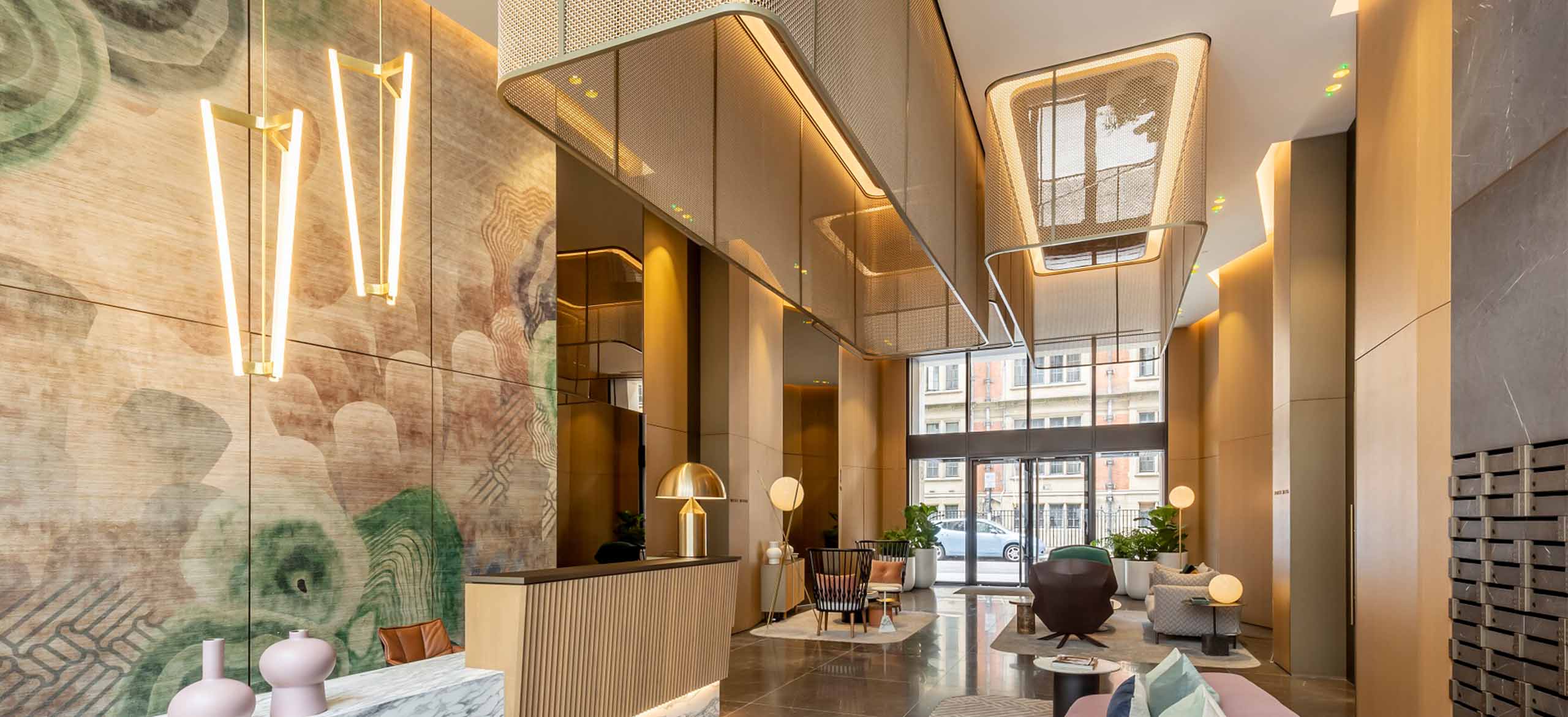
280 Bishopsgate
The goal of this project was to re-establish a prominent City of London address with a contemporary identity whilst respecting the building’s existing structure.
Morey Smith’s wanted to ensure that transparency and lightness was reflected throughout the project to create a refined, hospitality-led environment.
The materials selected for the project were carefully considered to ensure they could withstand high-traffic environments without compromising on elegance. Durability and long-term performance were essential, without compromising on the aesthetic for a busy space.
In line with the client’s ambition to future-proof the building, the specification focused on robust, low-maintenance materials that were sustainable and designed to last.
Adding the Woven Mesh
The outside facade is constructed using TXZ-3 woven mesh panels and it was selected due to its 3D woven profile, that has added depth and a subtle reflectivity to the building’s exterior. It also leant into the openness goal of the project and helped to lighten the building from the street. The mesh was finished in a Gun Metal PVD coating and it added a sleek finish that completed the architectural palette of the building.
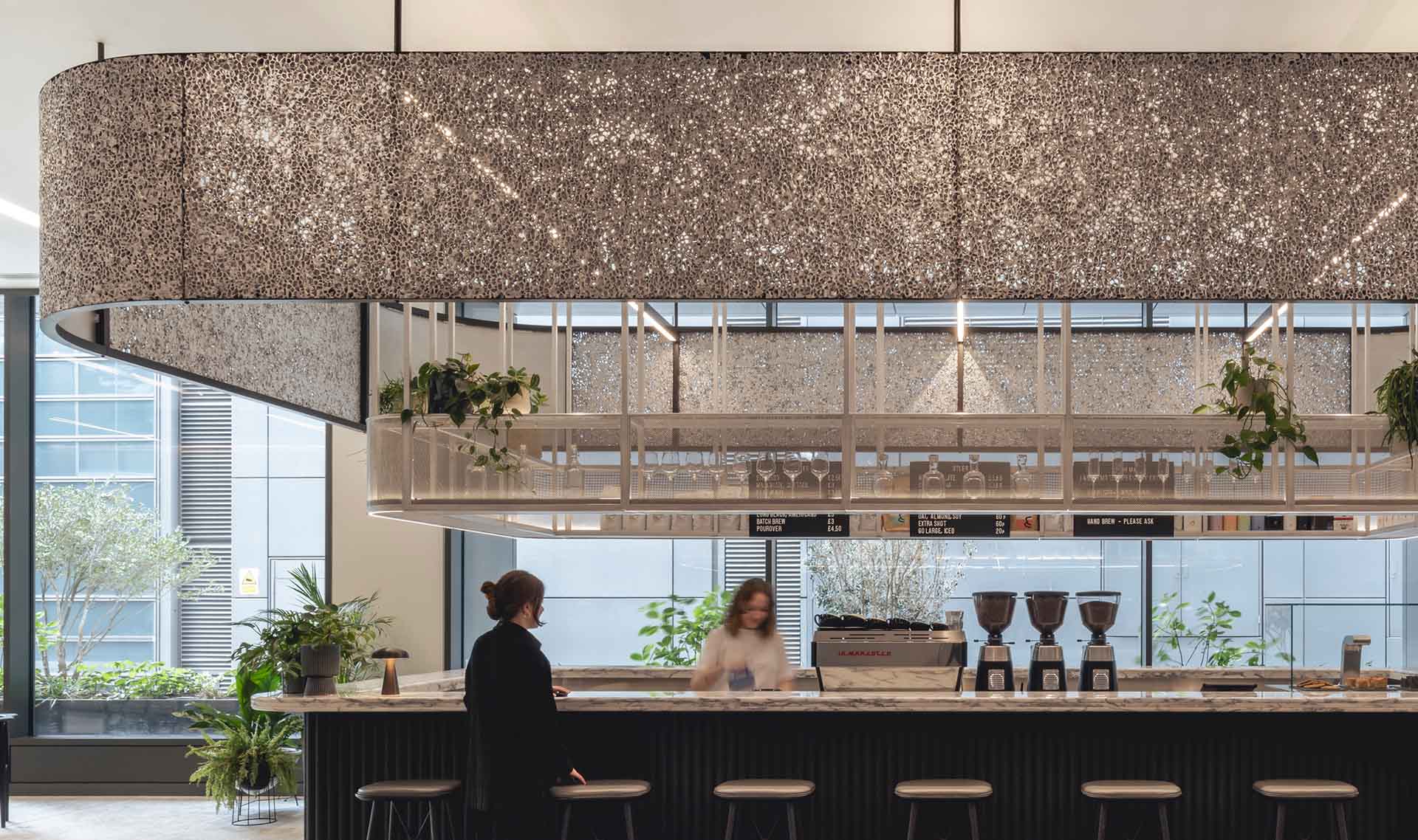
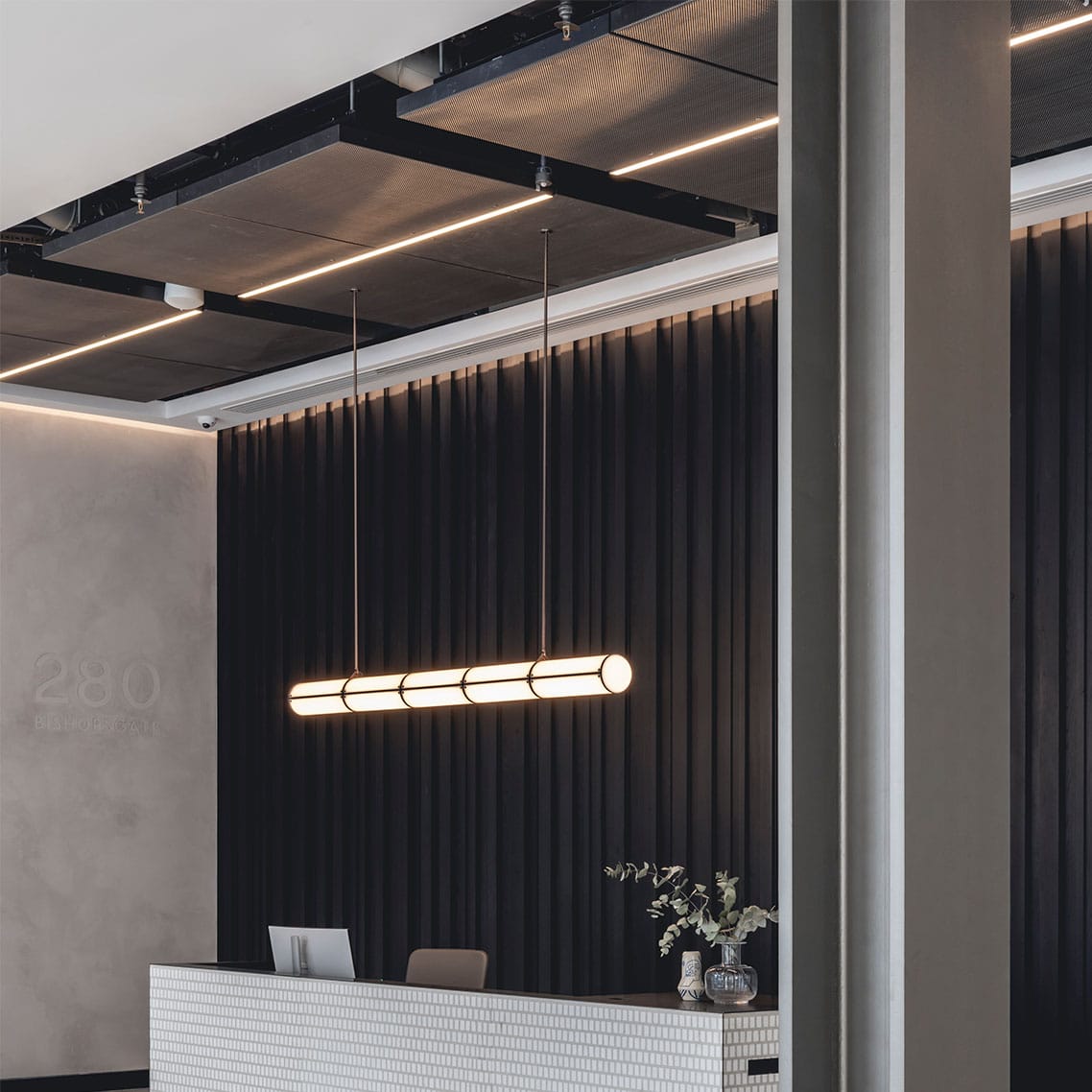
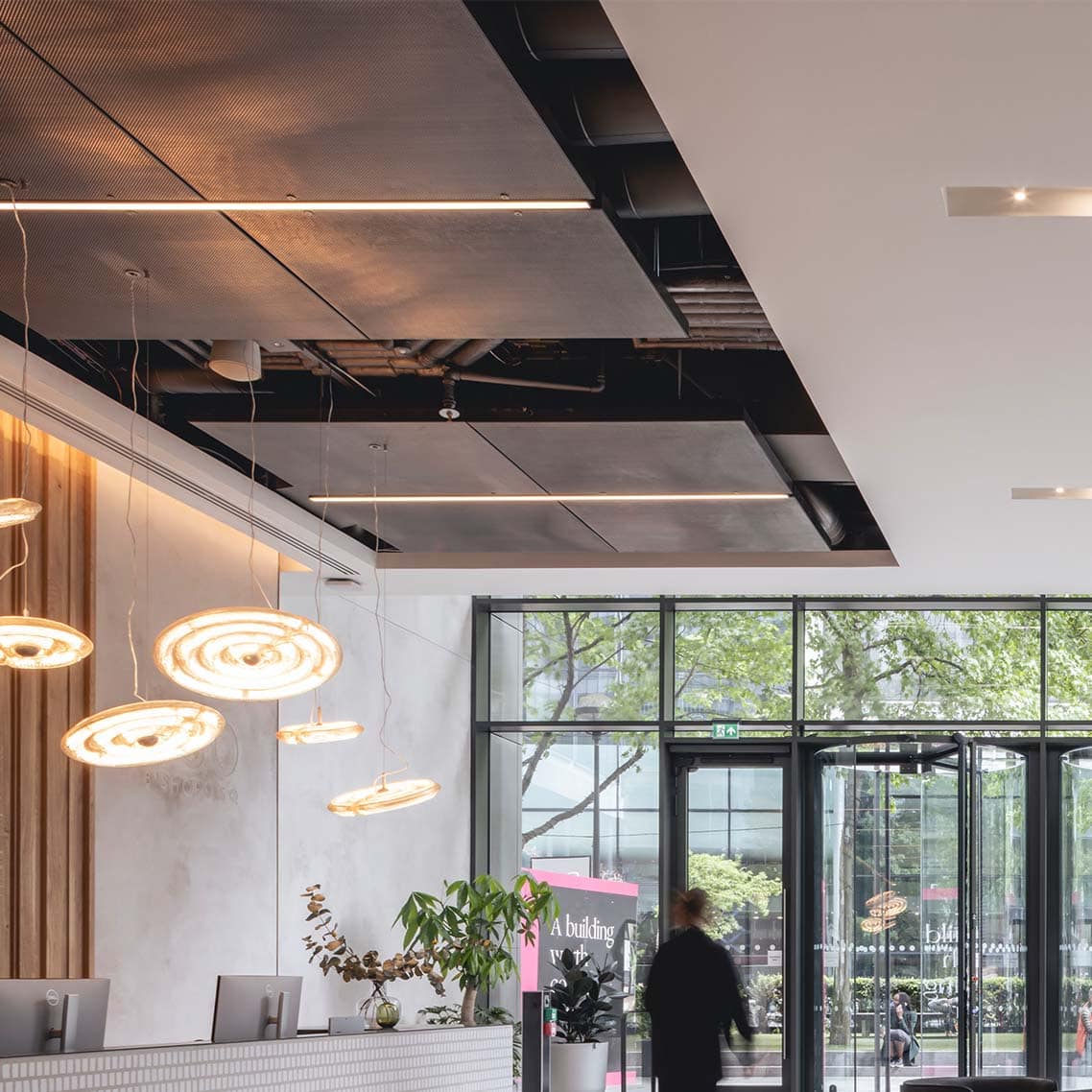
Internally, a bespoke ceiling was created for this project, our S-32 woven mesh was fabricated into a hinged raft system that included folded, drop-down rafts to allow for easy access to services above the ceiling. The services were concealed neatly above the ceiling without compromising on light penetration or aesthetic. This system is most similar to our AC400 ceiling system.
The S-32 woven mesh was the perfect choice for the lift cars and bar gantry as it provided a semi-transparent, stainless steel that was suitable for heavy daily use and added a touch of heritage to the contemporary project.
Providing Sustainable Materials
The TXZ-3 and S-32 woven meshes are manufactured from recyclable stainless steel, which supported the circular economy goals of the client. Stainless Steel has a long life cycle, thus reducing the requirement for replacement materials and can be recycled at the end of its life.
A PVD finish is more environmentally friendly than electroplating and painting, as it doesn’t discharge gas, water waste or any residual substances ad plant based solutions are used in the preparation phase to colour the stainless steel. In addition, to being more sustainable, it eliminates the need for solvents and harsh chemicals and ensures no toxic liquids are used.
The Final Result
280 Bishopsgate is a fantastic project to showcase how one material can be used across multiple applications, not only for consistency purposes but to create continuity throughout a building by using the same mesh for the ceiling, lift cars and gantry.